
Reflections of a Former Federal Corrections Officer
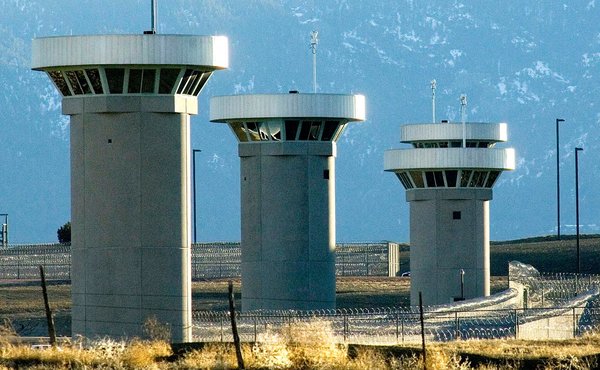
courtesy of Chris McLean, Pueblo Chieftain
“Welcome to gladiator school,” I tell a freshly transferred inmate as smoke from a fire in the cell block fills the corridor and ten of my fellow guards trod by in heavily armored riot gear. We pick him up off the ground, and I note his terror and confusion. This place, buried behind endless layers of concrete and steel, reeks of tension, fear, and despair. There is a smell to this despair: a hopeless stench of iron, emptiness, and shit. It can be felt like a dense, transparent cloud, especially in the corridor leading to the Special Housing Unit (SHU), or segregation, in one of the highest security and most violent penitentiaries in the federal system. It can be heard as the solid metal doors slam open and closed. We escort the inmate through the faded green corridor and into the deepest hole of this detached society. Here, completely isolated from the civilized world, an estranged community is separated by only a few layers of brick, some rolls of razor wire, and gun towers stocked with automatic high-powered rifles.
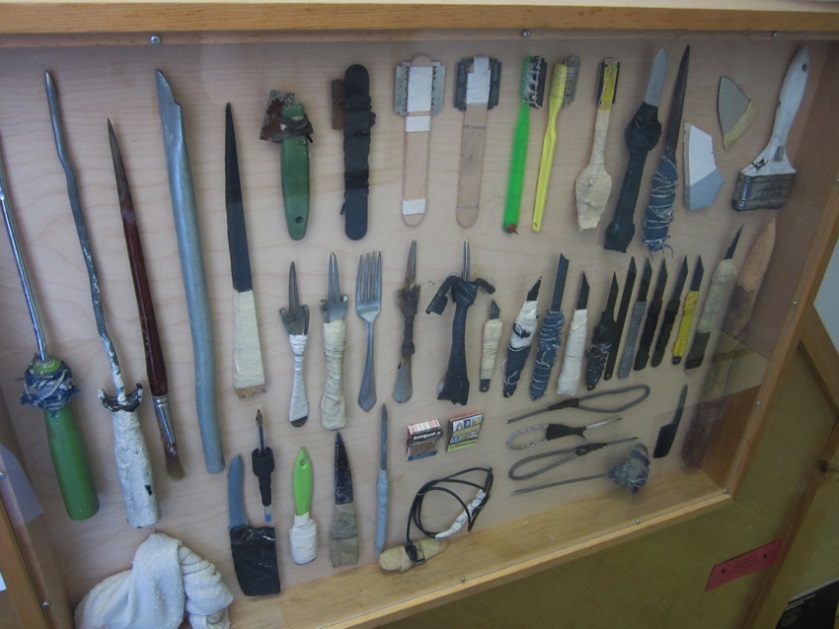
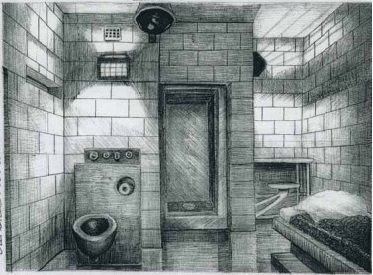 In segregation, inmates are treated with intense institutional contempt. They’re stripped of everything, literally and figuratively, and given only the necessary essentials. They’re placed in a box with no way to tell time other than the slow shifting of the sun, rarely viewable through a four-inch-wide window. Movements outside the cell only occur under heavy restraints and with multiple guard escorts. Their material goods are strictly regulated to prevent any fashioning of weapons. The psychological hardening of this forced isolation is astonishing. Physical hardships are of no comparison to the toll that solitude has on the mind. Many break down, physically and psychologically, while very few develop any useful emotional qualities from their time in SHU. Those who thrive in this environment certainly earn a peculiar respect, but more often than not, this raw dismantling of individuality, forced isolation, and psychological torture inspire fear and neurosis.
Memories and reflections like these, gathered from my time spent as a federal corrections officer, will stay with me for the rest of my life, along with quite a few more. For instance, I found out very quickly that unlike the strict oversight the prison system maintains over SHU residents, the penitentiary general populations often control themselves. Gangs will regulate their own members to prevent unwanted attention or embarrassing situations. This also allows them more freedom to pursue illicit activities. In one instance, during a shakedown, or cell search, I pulled two knives out of the mattress of a Sureno gang member. After locking his cell and returning to the office, I turned around to see J.G., a Mexican Mafia Black Hand (General), standing in my doorway. He apologized and told me that the inmate in question was from Victorville and things were run differently over there. After a short talk, we decided that instead of being put into storage, the individual who possessed the knives would lose all of his personal property, to include food, clothing, and books. His property was divvied out to other members, after an intense verbal reprimanding handed out by J.G. to the other gang members. The repercussions handed down by the gangs are commonly worse than those administered by the prison staff.
In order to bridge the gap between prison politics and federal policy, I had to develop my own set of rules. To successfully function as they did in this unconventional society, I became one of them, to a degree, by adapting to the politics, social networks, and lingo. I quickly figured out who hated whom, and why, even if it made no rational sense. I worked to transcend irrational motivations and accept the unorthodox morality of prison politics. I had to accept that despite witnessing a female guard getting attacked, inmates wouldn’t prevent it, due mostly to anticipated repercussions.
Thus, to survive mentally and physically, I had to become a part-time resident of these societies, sometimes utilizing cunning and forceful disciplinary strategies that responded to their societal codes while not violating federal law. Unconventional tactics were necessary in maintaining the functionality of those societies. Norms applied to civilized cultures were broken for the sake of maintaining order. So were laws regarding humane treatment. For instance, I was once taking too much static from a DC Black inmate. Given our high number of DC Blacks, I decided to pick three other gang members’ cells on either side of his and destroy them. By the book, I filled dumpsters full of excessive contraband, most of which took months or years to acquire. The following day, after the standard dinner lockdown period, I left him in his cell while I released the rest of the inmates. He raged, kicking his door and screaming at me. I stood there while a handful of the biggest, meanest gangsters stood around me and watched. Fight or flight. I opened the door to him huffing with clenched fists. He shook his head slightly and walked past me. They knew he had crossed the line, and this is how he was dealt with. Each cell block was different, just as each guard was different. For me, keeping them inside the walls and maintaining civility were my top priorities, and I used whatever means necessary to achieve that. Subsequently, that bridging of ideals led to an unfamiliar sense of similarity.