
Additive Manufacturing Is Printing Your Future
According to Star Trek, which takes place in the 24th Century, computers stored with thousands of different blueprints, recipes, and instructions can use that data to materialize food, tools, machine parts, clothing, and many other goods seemingly out of nothing. Here’s the exciting news: replicators have already arrived well before Star Trek predicted, and this technology has wooed as many different industries as Captain Kirk has wooed alien women. Additive  manufacturing, more popularly referred to as “3D printing,” has started showing up in many different industrial niches. We can now observe the first few baby steps in the growing field of 3D printing. In the next twenty years, these devices may very well give the average person access to cheap, customizable, well-made goods with the touch of a button, all in a matter of minutes.
NASA currently has experiments involving 3D printing. They are producing parts in the early development stages and testing the individual components of various designs. Engineers can program a part into a computer, print that part up on-site, and test to see if the part works correctly. When any flaws appear with an individual component, programmers can fix them in the digital blueprint and print up a new one. The European Space Agency 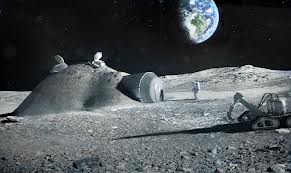 (ESA) currently conducts research using 3D printing to use regolith (lunar soil) to create bricks for a lunar base. If this research works out, the base will protect any inhabitants from meteorites, gamma radiation, and temperature fluctuations, according to ESA scientists. This also prevents having to bring construction supplies all the way to the moon. The presence of the construction material at the building site makes the need to ship materials from Earth unnecessary. The reduction in weight in the shuttle also reduces the amount of fuel needed to get from Earth to the moon. These weight reductions and having an abundance of the building material on-site greatly reduce the cost of such an endeavor.
While NASA and the ESA take 3D printing into space, doctors on Earth will use similar printers to push medicine to new frontiers. The medical field’s use of 3D printing will have staggering impacts. A few people around the world have already seen the benefits from artificial bones in their bodies that came from 3D printers. One man had 75% of his skull replaced with printed material. Another woman had her entire mandible replaced with artificial bone printed from titanium.
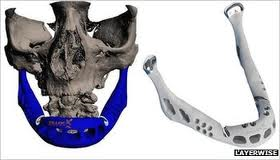 Here’s how this works. Computers scan the original bone, and the printed replacement fits the patient exactly. This allows for less of a chance of future complications from ill-fitting mass-produced synthetic bones. These new bones possess greater strength, while remaining lighter than the original bone. In the case of the mandible, the doctors even created built-in support structures for expected future dental work. The patient could breath, swallow, and talk regularly within 24 hours of the operation.
Scientists around the world have also created printable skin, cardiac tissue, blood vessels, and cartilage. Even more amazing, researchers at the University of Edinburgh have created a 3D printer that prints living embryonic stem cells. Over 89% of these cells survive three days after the printing process, while still testing positive for pluripotency, or the potential to develop into differing cell types. The potential outcome of this technology includes printable organs, with doctors able to print organs from stem cells, which means the benefits for patients reach dizzying heights. This technology almost entirely removes the need to wait for transplants or the chance of organ rejection. Clearly, the medical community’s ability to replace diseased and damaged organs should greatly increase quality of life and life expectancy. Hospitals can even order supplies and tools from manufacturing companies that will now use 3D printers.
Companies that manufacture just about anything have several benefits that 3D printers provide. Artists and designers can now create new shapes and support structures due to the nozzle of the 3D printer and the fact that the original image exists in the mind of the designer and the computer program. Since created items print layer by layer, these machines can generate stronger support structures and new shapes. Traditional manufacturing has issues with combining different types of materials, due to high costs and chemical or physical properties that make combining certain materials difficult. 3D printing has overcome many of these issues, and several companies now have products that have finishes that appear and feel like glass, metal, and ceramics. Traditional manufacturing cuts a finished product out of a block of the required material. In 3D printing, each layer builds upon the last, leaving no waste product behind. From prototype to a completed product, traditional manufacturing can take up to two days to finish a product. 3D printing takes a few hours. All of these benefits add up to one significant outcome — companies that use this technology save up to 70% in manufacturing costs. Then, they pass these savings on to their customers.
Many Arts communities have also taken to using 3D printing. Sculptors, architects, and fashion designers all have printed out their respective mediums from these printers. Sculptors can print their sculptures to sell for decorations in people’s homes. Architects have used them to print out models of their designs. Even more surprising, three current companies plan to construct actual buildings with 3D technology. One of these companies claims they only need three weeks to print the materials, and just one day to assemble the structure. 3D printers can even print clothing now. Joshua Harris and his team have designed a wall-mounted printer that can electronically access the designs of multiple clothing brands. This machine will even break down old clothing into plain thread and re-print the thread as new clothing.
Some may wonder when we can walk up to a 3D printer in our own homes and order lunch, just like they do in Star Trek. The good news, here, is that many companies have already started printing 3D food. Currently, these particular machines can only print in a single medium. For example, a Japanese company made customizable chocolate faces of your loved one for Valentine’s Day. Google has offered 3D-printed pasta in their employee cafeteria. Scientists currently working with artificial meat substitutes can print a variety of shapes, to give the appearance and texture of different meats. Perhaps the most interesting aspect of printable food is that any individual can easily add certain vitamins and nutrients into the printing medium to meet his or her own personal dietary needs. An individual low on Vitamin C could literally add that vitamin to a cookie.
3D printing will soon appear everywhere. As the technology improves and becomes less expensive, the printers will start to appear in most of our homes. When this occurs, the 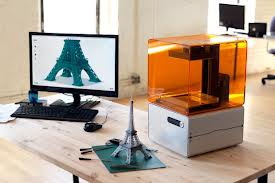 average person will have cheap, reliable access to many different goods that he can alter to satisfy his own needs and tastes. With the prevalence of 3D printer testing in so many different industries right now, matched with the promise that the technology seems to show, a smart consumer may decide to start investing now in companies developing this technology.