“In a civilized country like where I come from,” said Eustace, “the ships are so big that when you’re inside you wouldn’t know you were at sea at all.”
“In that case you might just as well stay ashore,” said Caspian.
from C.S. Lewis’ The Voyage of the Dawn Treader
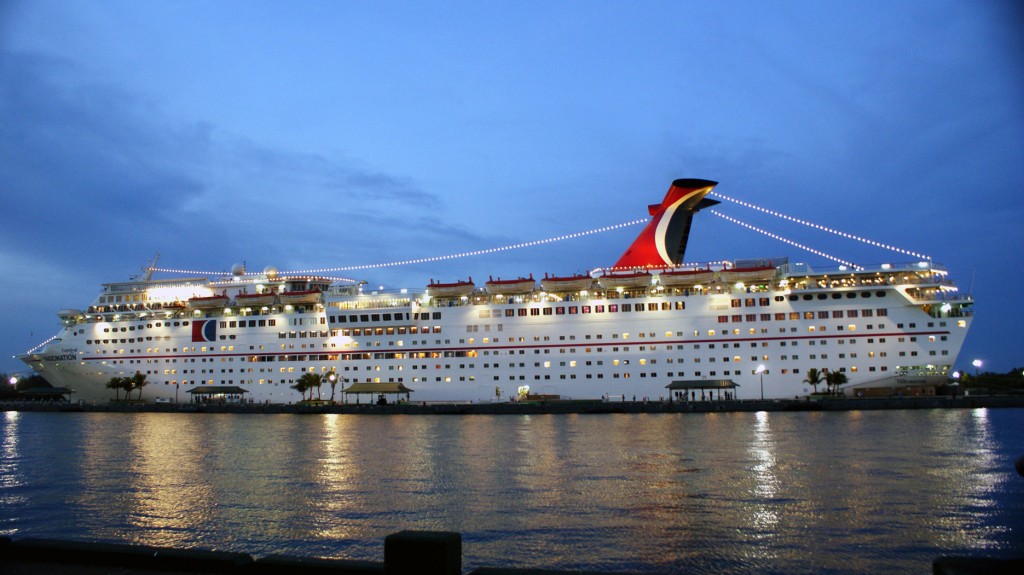
In 2011, Carnival Cruise Lines began a $500 million investment to upgrade their fleet of cruise ships to what they call “Fun Ship 2.0.” According to Carnival’s website, on this new line of cruise ships, guests can indulge in “mouth-watering new dining choices, more exciting bars and lounges, and captivating entertainment options” such as Hasbro-themed game shows and enough new bars to keep passengers mentally absent for hours on end. Adding to the popular appeal, Carnival has hired comedian George Lopez and Food Network star Guy Fieri to design the comedy clubs and fast food joints. They have put a lot of money and effort into producing pure entertainment.
I missed this upgrade by a few years. In December of 2008, I took the Carnival Fascination (Fun Ship 1.0) down to the Bahamas. I visited Ernest Hemingway’s house in Key West and explored the old forts of Nassau. I enjoyed activities like these, but much to my surprise, I left the ship with a feeling of dread. During the short week I traveled down Florida’s east coast, I found myself drawn more to the ship’s crew than the passengers. Attitudes contrasted sharply: the passengers laughed freely while the crew struggled to crack a grin. Through discussions with various crew members, I learned that this attitude grew from a relentless employment system that thrives on long hours, unequal pay, impossible standards, and other questionable business ethics, all of which culminates in huge profits for the company. My ensuing research shows that this applies not just to Carnival, but to the industry in general.
Recruitment
Most cruise lines operate in much the same way as Carnival and draw their employees from the same recruiting firms. To cut costs and increase their own profits, they usually acquire cheap labor through A.W.C. Cruise Ship Recruitment Placement Agency, which advertises on its website that it owns offices in “USA, Singapore, Indonesia, Philippines as well as affiliate offices in Europe and South America.” A.W.C. typically sends employees from poorer parts of the world to its clients for menial labor like dish washing and stewarding. A.W.C. bases its pay rates on the average wages of each employee’s home country, so a man from the Philippines may make about $1.00 per hour while a man from Russia could make several times as much for the same work. In poor countries, these hiring agencies have long waiting lists for work and will never run out of help, which means A.W.C. and its clients (the cruise ships) will never have to improve either the wages or conditions to attract more employees. A.W.C.’s many clients include Carnival Cruise Lines, Royal Caribbean International, and Disney Cruise Line. Chances are, if you sail on a popular cruise line, sooner or later you will probably receive your drinks from a desperate and unhappy Filipino man who barely speaks English and is being paid around $1.00 an hour.
For their leisure employees—hairdressers, massage therapists—these cruise lines typically find cheap labor through Steiner TransOcean, an employment agency focused on recruiting and training employees from First-World countries like the United States and Britain. Cruise Bruise, a website dedicated to recording incidents and conditions aboard cruise lines, reported that Steiner “provides dirt cheap labor of about 2,000 crew members on average for 129 cruise ships including those owned by Carnival Cruise Lines.” Since between 250 and 300 cruise ships sail around the world at any given moment, this represents at least a third (if not half) of the whole industry.
Steiner has a reputation for ruthless training and barbaric managers, but I’ll open this phase of the discussion with a concession. Some have said in online forums that they enjoy working for Steiner, and that the conditions are on par with basic training in the military; that is, if you put in the effort, you will see the rewards. A former Steiner employee said on Indeed.com (grammatical errors  included), “Yes, majority of the horrid experinces are true but Steiner want tough, positive, determined staff. They treat you harshly, with long enduring hours with strict curfews and crappy food, [k]ind of like being in the army!”
Should Steiner suddenly decide to advertise the real training conditions to every prospective employee, one might be more willing to accept this intense regimen, as it likely serves at least a few useful outcomes. After all, some Steiner employees consider themselves successful. However, many people who sign up with Steiner have no idea what they’re in for. Steiner’s website advertises a career with their company as a life of luxury and adventure. In contrast to the vibrant and happy images on their home page, a mother said on Indeed.com that her daughter had started training at Steiner, and “she is very unhappy due to the housing and lack of proper communication in regards to an actual start date onboard. The training staff she advised are rude and quite verbally aggressive.” Did Steiner warn this girl of the training methods, or deceive her with bright images of adventure? The same mother from Indeed.com said the trainers push their students to use and buy more makeup, and the training facility does nothing to cater to various dietary needs such as allergies or intolerances. In all likelihood, the company didn’t make this information readily available because this woman’s unfortunate daughter learned this only after beginning her training. A company shouldn’t necessarily feel obliged to coddle any of its employees, but when people in positions of responsibility neglect the physical needs of their students, tough love becomes abuse.
To make matters worse, salaries don’t justify this treatment. Once Steiner employees finish their unpaid training, they typically rely on commission to get by, so wages average around a dollar or two an hour. Only these few dollars come straight out of Steiner’s own coffers. Current and former employees have pointed out that Steiner will not pay for your work clothes or the flight home following employment, instead making employees pick up the bill themselves. One has to wonder what Steiner does pay for. The company’s revenues continue to increase, from $126.3 million in 2006 to $140.4 million in 2007, a difference of $14.1 million in a single year. Moreover, Steiner stock values remain consistent from year to year, with infrequent, always temporary dips. Because cruises remain popular year after year, Steiner continues making a massive profit. Would sparing, say, another dollar an hour for their employees be such an economic burden?

Since my cruise in 2008, I’ve also observed a pattern of discrimination in cruise line hiring practices. Specifically, cruise lines use different companies (Steiner, A.W.C.) to select and train people from specific countries to perform particular tasks. A Filipino man from A.W.C. will clean your room while a sprightly, hand-picked coterie of American girls do a little dance for you. This gives the cruise ship what amounts to a racially bearable façade, as the customers will directly interact with culturally familiar French waiters or American entertainers, and only briefly interact with unfamiliar Filipino cleaners and cooks who, whether one wants to admit it or not, signify the cultural Other. On the sea, this racial hierarchy defines our “leisure” experience, and few people see the problem. What would happen if we tweaked these conditions slightly and had only African-Americans clean up after the guests? Would this inspire deafening outrage? In any case, because these menial-task employees hail from comparatively impoverished countries—the likes of which the average American typically ignores—we hear little more than a peep from the media. Perhaps not so ironically, hypocrisy and prejudice continue to thrive in a culture impressed with its own progressive mentality.
Working Conditions
 Cruise line employees work longer hours under more duress than most Americans would ever dream of tolerating. A typical cruise line employee can expect to work with a skeleton crew (or alone) for at least 12 hours straight without much time to sleep in between shifts. When the hours go beyond this average, which does indeed happen more than many administrators would like to admit, the companies typically don’t recognize these additional hourly duties as overtime.
A strong marketing mentality keeps these employees afloat, whether they are selling drinks, jewelry, or souvenirs. Managers on these ships push their employees to meet extremely difficult sales quotas. If staffers don’t meet these daily goals, they may soon find themselves out of work. When the sun sets, employees have already worked beyond a typical 8-hour shift, but right at this very moment, the managers put even more pressure on their employees to meet sales goals before the guests turn in for the night.
Room stewards have it especially hard. The workload frequently requires stewards to hire additional help using their own money, which seems like an unethical situation by nearly any civilized person’s standards. A stateroom steward for Norwegian Cruise Lines ran into this problem while working through his contract with the company. The Daily Beast quoted the steward as saying, “There was no way two of us could clean 34 rooms between 10:15 and 11:30 a.m.” So, as misfortune would have it, an employee trying to save money for his family back home may have to use those savings to finish his work in order to keep his job.
The stress and exhaustion these employees feel has caused sicknesses and injuries, which inevitably leads to weakened performance. No matter the reasons, when an employee fails to meet the standards of this draconian system, he or she may experience what the crew has termed “The Six A.M. Knock,” in which a member of management wakes a crew member to tell him or her to pack up and get off the ship, regardless of the port. Some terminated crew members have testified online that although the cruise provides for your transportation back home—by scheduling a flight, for example—if you miss the designated departure time, they then leave you to find your own way home. A.W.C. advertises in its job postings that “travel expenses will be paid upon completion of the first contract.” However, former employees have testified online that an early termination of the contract—through your decision or theirs—means you will pay for your own flight home. Considering that other testimonies have contradicted this claim, it seems to me that these employment agencies act inconsistently in their treatment of employees. If he can even secure transportation home, a man from the Philippines who knows only essential English could miss his flight in the confusion. Many of these employees don’t make enough money to buy a flight overseas. What becomes of them then?
Conditions for some employees have deteriorated so much that many of them decide to jump ship and disappear into unfamiliar American cities. U.S. Customs and Border Protection agents confirmed these incidents and have made efforts to prevent what some statistics indicate might be thousands of cruise line ship jumpers every year. Of course, while some of these deserters must have had illegal immigration in mind when they first signed the contract, perhaps others saw greener pastures off the ship and could not resist the urge to escape a despicable work environment.
Jumping ship and blending into an American city might not seem like such a bad idea given that the average international cruise ship worker earns between $0.75 and $1.50 an hour. If an employee earns $1 an hour at 12 hours a day, she earns a whopping $336 a month. As I mentioned earlier, much of the crew comes from the Philippines, where workers typically earn about $279 a month, so it might seem at first glance like they earn a decent living. However, these cruise lines typically charge American rates for their products and visit American ports, where it costs more to eat and shop. If foreign employees want to have a decent lunch off the ship, doing so will cost them a large chunk of their paychecks. When employees have to hire extra help to finish their work, more of their income evaporates. Money becomes so scarce that most employees stay on the ship throughout their contract, not once stepping foot on these exotic locales.
While I understand these people are on the ship to work, not play, I also believe they have earned their leisure time; yet a Filipino can easily spend an entire eight-month contract looking out the ship’s windows. International employees typically sign contracts with employment agencies because they want to provide for their families with wages higher than in their home countries, but factoring in location and personal expenses, they gain little—if anything—by sailing the sea.
Prejudice
The unpleasant working conditions aboard cruise ships often engender prejudice and spite. Besides the companies’ poor treatment of their employees, the guests do little to make the jobs easier to handle. Many guests tip very little, act like working on a cruise ship is a privilege, and tell the employees that they can go home if they don’t like the jobs. In other words, these guests make little effort to understand that these employees sign contracts, work tirelessly, and cannot easily leave the ship.
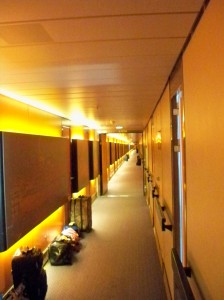 Disregarding the situation aggravates an already sensitive issue. A significantly high number of testimonies suggests Filipino workers generally dislike Americans to begin with. When Americans with enough money to sail in luxury tell these struggling men and women to appreciate their fortune, those prejudices only get worse. Some of these employees even act out. Statements from a broad cross-section of cruise line crews validate a disturbing corroboration: disgruntled employees have intentionally contaminated guests’ food and drinks and neglected to wash their hands or wear gloves, sometimes intending to spread sicknesses like the flu-like norovirus. On the last night of the cruise, when guests put their baggage in the halls for collection in the morning, some of the crew have rummaged through the bags to take expensive items, perhaps to sell them and supplement their paychecks. Crew members speak of this thievery as though it has become routine.
While I would not defend sabotage, theft, or a blatant disregard for sanitation, I can understand the anger that triggers this retaliation. While sailing on the Carnival Fascination in 2008, I spoke to a man from India who complained about the prejudice, and he emphasized the discriminatory wages. This decent fellow ran a large gift shop alone, all day long, and earned maybe a fourth as much as the Russian who ran a tiny liquor store down the hall. He complained that he never had anyone to talk to. Customers typically bought their merchandise and then left as soon as possible—a standard for any retail setting. To aggravate this man’s situation, management did not (and does not) allow fraternizing with the guests, for fear of romances brewing (a popular method to immigrate). In theory, co-workers would serve as his only social outlet, but because he worked alone, this outlet didn’t exist. I imagine he could only briefly talk to other employees in passing before and after their long shifts. Whatever the case, this poor soul who opened up to me felt isolated, exhausted, and at his wits end. To his credit, he didn’t resent Americans for his situation; he only resented his employers. If I were to live in his shoes—told to work every waking hour, alone and shut off from every person I see—I would surely develop some resentment, too.
Ethics
One might wonder how cruise lines based in the United States, owned and managed by Americans, could get away with discriminatory hiring practices and exhausting working conditions. In short, they play by different rules. They register their ships in foreign ports, such as Cuba and Nassau, so their business practices fall under the scrutiny of Maritime Law, which allows for looser employment practices on international waters. This enables the cruise ship industry to conduct business with methods that have no place inside U.S. borders. Unfortunately, while many would prefer to have these companies register on American soil and adhere to American laws, one can find no legal reason to make them adapt to our stricter guidelines. Cruise ship companies conform to the constraints of Maritime Law, and this turns them a profit. Making these companies change their ways to appease our ethical sympathies would take nothing less than a miracle. It would mean attacking those profits by convincing hundreds of thousands of customers to stop booking their vacations on the sea—customers who may want to turn a blind eye to these issues so they can fully enjoy sipping margaritas as they stare out at the rolling waves.
Perhaps making changes to the cruise ship industry is just a pipe 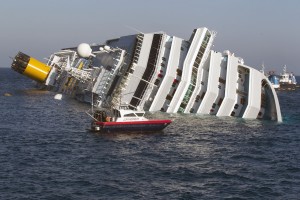 dream. Guests like sailing in luxury, no matter the cost, and in fact, despite various disasters and economic turmoil, the demand for cruises hasn’t declined. Cruise Bruise reported in October 2007 that Steiner, the leisure employment agency, maintained a stock (STNR) “in the mid $40 range.” As of February 23, 2013, their stock still sat at a comfortable $44.77 ($49 on March 19). During the fourth quarter of 2008 and the first quarter of 2009—the height of the financial crisis—that stock dropped to nearly $20, but in just a few more months that stock returned to regular levels, where it remains today. This trend has remained steady even after the Costa Concordia sank off the coast of Italy last year and the Carnival Triumph caught fire in February. Once the Carnival Cruise representatives finish polishing the company’s briefly tarnished reputation, I doubt even the more recent power failure on the Carnival Dream-and the temporary kidnapping of its passengers-will deter vacationers from sailing.
This says quite a lot about the habits and desires of Americans in general. Apparently, in a time of disaster and economic turmoil, company shareholders enjoy stability and growth at the expense of their hired help. Despite the readily available information about terrible employee compensation and working conditions, people still act like life working on a cruise ship mirrors life as a passenger. People tend to ignore what they don’t want to see. After all, they are on vacation. They only look for what makes them happy, which means turning a blind eye to everything else on board, as if to say, “It’s not my problem.” Likewise, when bad things do happen on board, “The public’s memory is short,” as NBC News’ cruise consultant Peter Whelpton notes. Short and selective.
Optional Voyage
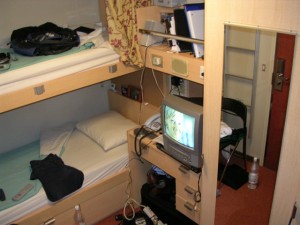 In writing this, I carefully avoided comparing the situation to slavery. Some of the employees have made this comparison, but the parallel is unfair. These employees all get paid, have their own beds and television, enjoy air conditioning and decent food, and aren’t held against their will. Still, let’s be fair about this. Paltry contracts and the need for money can make anyone feel imprisoned. When recruiting agents don’t clearly explain the conditions of the job, resentment brews. I understand the retaliation, the anger, the feelings of abuse, and yet I cannot understand why this continues in a country concerned with equal rights. Steiner and A.W.C. make enough money to invest in a happier crew and, by extension, happier passengers. The CEO of CostCo recently announced that happy employees are the secret to his success. Steiner, A.W.C., and all of their clients need to pay close attention to this because they may learn something valuable. If the customers and employees were all happy aboard the ships, this industry could create a truly addictive vacation experience. The money would continue to roll in, and people would not scrutinize their ethics—at least not as frequently.
By doing nothing to improve the situation, Carnival encourages these problems. They take advantage of inexpensive labor to earn massive profits. Consider that they spent half a billion dollars on games, food, and jokes, instead of supplementing their employees’ quality of life. Carnival does not misunderstand what happens aboard their ships; they intentionally turn a blind eye to it. The company spends lavishly on First-World entertainment with a specific goal in mind: to increase shareholder profits. However, as I have mentioned before, Carnival is not alone in this. Other cruise lines operate in a similar fashion.
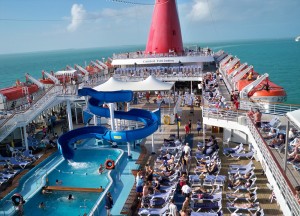
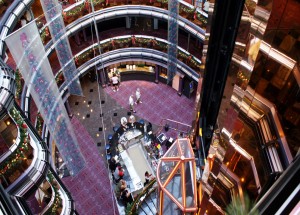
When I sailed on the Carnival Fascination, I could hardly believe the size. Who needs floating resorts? Who needs gold chandeliers in a French-themed restaurant while these employees live in cramped quarters and have no time to relax? An unquenchable thirst for leisure and fun has created a needless monstrosity. These ships have comedy clubs, casinos, restaurants, bars, stage plays, and gyms. Still, we have all of this on land already, don’t we? To again echo Caspian, “you might just as well stay ashore,” if not for your sake, then for theirs.
Unless otherwise linked, photos provided by David Grant.

As a massage therapist who thought about looking for a job on a cruise ship, I am glad that I did not choose to go down that road. The conditions sound atrocious, and I am not known at my jobs as one to put up with any kind of bullshit, from customers or co-workers.
If you want to marry your job, work from sunrise to sunset, and only earn as much as you can sell, then I would say go for it. Americans seem to get treated a little better, but as I made clear, nobody is immune to harsh treatment. You could get stuck with a manager who has it out for you, and suddenly a stressful job in paradise becomes a struggle to maintain your sanity.
Excellent opening quote Excellent writing, as well. You provide a deep, empathetic connection to these workers’ situation along with the data to back it up. I’ve never been interested in a cruise such as this, but I’m even less interested now. As I’ve said before, if I ever go to sea it will be on a tall-ship.
Good quote indeed! Thanks for reminding me of that part; you deserve the credit for the intro. It has been years since I read that series, so I would not have remembered it myself.
I would love to sail on a tall ship. Aside from my qualms with the business, I miss being on the sea. It’s an exhilarating experience I think all people should try. Hell, I could write a love letter to the sea. My only concern is coming back to land. After a week on the Carnival Fascination, I felt very queasy and unbalanced walking on steady ground. After swaying on a smaller vessel, I can imagine myself doing the Jack Sparrow walk.
You have crafted an exceptional article — impressive. You remind us all how easy it can be to neglect what is right beneath our noses. You also open people’s eyes to a dilemma which is far from obscure and yet somehow always is either unnoticed or overlooked by the general public. The disturbing thing is that you cannot possibly have been the first passenger to get in closely with the staff and crew over the years. Other people have undeniably discerned similar details and many have likely witnessed first-hand the mistreatment and abuse which takes place upon these massive floating municipalities. And yet the behavior continues to be allowed and even encouraged in many ways.
As you said, the majority of people who travel upon such exorbitant edifices simply do not concern themselves with the well-being of others, especially those whose sole purpose in life clearly is to serve and supply such esteemed passengers as themselves. Throughout my travels over the years I have also witnessed such disgraceful behavior, though in different ways than you have. Despite the different circumstances between your experiences and mine, similar behavioral patterns are obvious in the majority of persons who travel.
There are those who travel to feed their own need for exploration and new experiences, and then there are those who travel for necessity, such as employment requirements, family visits or relocation. And then there are those who travel for the sake of being noticed as they travel, and they often expect others around them, employees or not, to cater to their needs as if nothing else in the world matters except for their own personal and individual satisfaction. It is people like those in this last group who encourage circumstances such as what you witnessed on your cruise.
Articles such as yours are the first step in fighting such injustices. I enjoyed reading your piece and look forward to your next.
I’m sorry I did not reply to your comment sooner. I learned what kind of traveler I am while on Carnival Fascination. I wanted to browse the flea market (or bazaar, or whatever they call it there), even though they sold their goods more aggressively than I am used to. I wanted to experience their culture, though that port-based part of the culture centered around making money off tourists. I don’t want to travel to meet other Americans, but to see what else is out there…and so far I have not liked some of the things I’ve seen. I won’t soon forget about them.
That being said, I can understand people who ignore these issues in favor of their leisure…they don’t know what they can do about it, and many people have little power to affect any kind of change anyway. If you can’t do anything about it, why beat yourself up over it? At the same time, that is no excuse. The internet provides so many options. You don’t have to be a writer or a politician to get the word out; you can create a Facebook page supporting cruise ship employees, post a few things about the working conditions, and collect followers. Get people riled up. That’s all it takes. Get the right people angry, and something real might happen.
I have never liked the phrase “if you’re not part of the solution, you’re part of the problem” (I like gray areas), but lately I see the reason in it.
Several years ago, I was employed at the Carnival Cruise Lines reservations call center in Colorado Springs. My corporate email address was very similar to someone in the crew scheduling department, so occasionally I was “priveledged” to see emails from harried, frustrated crew members with regards to their schedules; by far the most recurring complaint was that a change in scheduling would break up a couple. Like the airlines, Carnival overbooked its ships, using a “cabin guarantee” system. At the time of booking, the guest was not assigned a cabin, instead booking into a certain category of cabin with the accomodations assigned at the time of sailing. The selling point was that the customer would be granted an upgrade, if available, but in reality, this allowed Carnival to overbook and at the pier on the sail date look for ways to deny people boarding, ie documentation issues. Once you were denied boarding, it was up to you to appeal to Reservations Administration for a refund. And shipboard safety and lifeboat drills? A waste of time. In history, ALL of the high-profile accidents such as Titanic, Lusitania, Brittanic, Andrea Doria and Costa Concordia had one thing in common: with the exception of Titanic (which sank on an even keel), they ALL capsized, making lifeboats impossible to launch once the ship reached a certain degree of list. Abondoning ship with 6,000 other people? Come on. Im not about to search out my assigned lifeboat station, Im getting in the closest one! I was fired from Carnival after my traveling companion purchased something in Jamaica that Jamaica is known for and it was found on his person as he tried to board the ship. The letter they sent me spelled out in no uncertain terms “your guest on a company ship attempted to board with and illegal substance, ” therefore I was fired…..? The whole thing seemed almost comical when Carnival presented their case to the Unemployment Board of Appeals and tried to convince them that I (an over 21 year old adult) was responsible for the actions of my traveling companion, (also an over 21 adult). They didn’t buy it, and Carnival paid me unemployment for a year.
Michael, thank you for sharing your experiences on Carnival. I’m not surprised they fired you over such a ridiculous charge. I’m sure you left the ship with a good deal of anger and resentment toward the company, but in retrospect I’m sure you feel leaving the ship only improved your lot in life. Am I right?
I hesitated a few times when I began writing this article, because concrete information was hard to come by. But as more stories corroborated with each other, the more the picture clarified, and it became obvious that this situation does indeed exist. I spoke to a woman at my job the other day, and she told me she used to work on Carnival Cruise as well. She told me that some of her co-workers had to hire extra help with their own money to finish their impossible workloads. She brought this up before I mentioned my article here, so she confirmed some of these testimonies. I realized that this is indeed a common problem, as I’m sure your problems are not isolated cases.
“Comical” is a good word for the industry’s habits. They seem to think they can work people like machines and make exorbitant profits indefinitely. Now, disaster after disaster have threatened their image, and I get the feeling the many upsetting truths about the inner workings of the industry are about to make some very public appearances.
On another note, I have begun reading the book “Devils on the Deep Blue Sea” by Kristoffer Garin. It seems like quite an extensive, in-depth look at the industry, from its tumultuous beginning up to its modern abusive system. It’s the most intriguing book I could find on the subject.
Chris, did you see this?:
http://www.usatoday.com/story/travel/cruises/2013/04/03/carnival-triumph-breaks-loose-alabama/2050455/
It’s just one thing after another for Carnival.
I have talked to a few former Carnival employees recently. One woman told me that they constantly cut back on employees and give the remaining employees more and more work. I’m sure their lack of help (and exhausted employees) led to this recent string of disasters. In this case, “the wind did it” is not a good enough excuse. They have secured their boats well enough before; how does a strong wind change that now? I’d say they don’t have enough people double-checking all their safety measures.
And it continues. The Carnival Fascination, the ship I sailed on, failed its recent health inspection. http://finance.yahoo.com/news/now-carnival-cruise-ship-failed-200416351.html
This is eye-opening. You’d think that working on a cruise ship would be fun, at least part of the time. Also, these ships are getting unreasonably large for the function they serve. I’m going on a cruise to Alaska in the fall, but I’m going to see whales, the Northern Lights, glaciers, and the beauty of the ocean, not sit in a casino, climb a rock wall, or catch a play. There was a time when cruise ships were a means to get from one place to another. Companies such as White Star Lines and Cunard Lines competed for their share of the market. Yes, the Titanic was called a floating palace, much like today’s liners, but she served a purpose. She had facilities on-board that catered to wealthy travelers on long Trans-Atlantic voyages. Modern liners travel for only a few days, yet require fitness centers, casinos, and climbing walls to keep passengers entertained? A very interesting and informative article. Thank you.